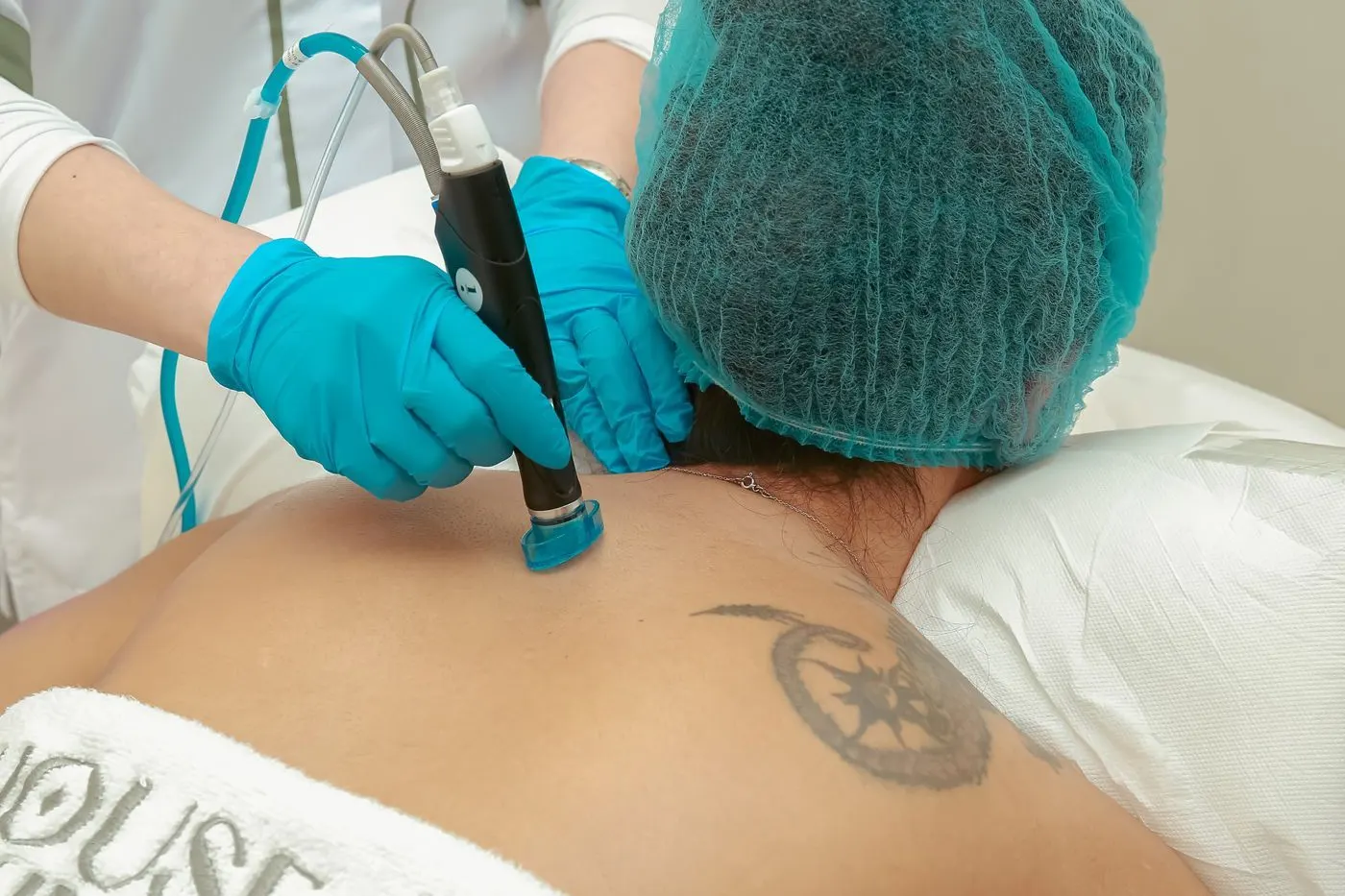
Laser tattoo removal is a treatment that uses short pulses of laser light to break tattoo ink into tiny particles, which the body then clears gradually.
People choose tattoo removal for many reasons: a tattoo they no longer want, a design that has faded or blurred, a cover-up they are planning, or work and personal reasons. Treatment is done over several sessions, and the tattoo usually fades a little more after each one.
At Tadawi Medical Center in Doha, laser tattoo removal is carried out by our dermatology and aesthetics team after a skin assessment.
What is laser tattoo removal?
Tattoo ink sits deep in the skin, in a layer called the dermis. The particles are too large for the body to remove on its own.
The laser targets the ink without cutting the skin. Over the following weeks, the body’s immune system carries away the broken-down ink.
How does laser tattoo removal work?
During each session:
- Laser energy is absorbed by the ink, not the surrounding skin
- The ink breaks into smaller fragments
- The body clears these fragments over the next weeks
- Further sessions target the ink that remains
Different ink colors respond to different laser wavelengths, so the settings are chosen for your tattoo and skin type.
Can every tattoo be removed completely?
Not always. Many tattoos fade significantly, but complete removal is not possible for everyone, and a faint shadow may remain. Results vary depending on:
- Ink color: black and dark blue usually respond well; green, yellow, light blue and white are harder
- Tattoo type: amateur tattoos often fade faster than dense professional ones
- Age of the tattoo: older tattoos may fade more easily
- Location: tattoos far from the heart, such as on the ankles or fingers, may fade more slowly
- Skin type and overall health
Suitability is determined after assessment.
Who is a good candidate for laser tattoo removal?
Treatment may be suitable if you:
- Have healed tattoos you want to remove or lighten
- Want to fade a tattoo before a cover-up
- Have realistic expectations about the number of sessions and final result
- Can avoid sun exposure on the area during treatment
Who should not have laser tattoo removal?
Treatment may need to be delayed or avoided if you:
- Are pregnant or breastfeeding
- Have a skin infection, open wound or active rash in the area
- Have a recent tan or sunburn
- Tend to form keloid or raised scars
- Have taken isotretinoin recently or use medicines that make skin sensitive to light
- Have a tattoo over a mole or skin lesion that has not been checked
Cosmetic tattoos, such as eyebrow or lip tattoos, and tattoos with white, flesh or some red inks can sometimes darken with laser. A test spot may be advised first.
How is laser tattoo removal done?
- A consultation and skin assessment, with photos of the tattoo
- Protective eyewear for you and the clinician
- A numbing cream or cooling may be used for comfort
- The laser is passed over the tattoo in short pulses
- A soothing ointment and dressing are applied
Small tattoos may take only a few minutes. Larger tattoos take longer.
Is laser tattoo removal painful?
Most people describe the feeling as a quick snapping or stinging, like a rubber band against the skin. It is usually well tolerated, and numbing cream and skin cooling can help. The area may feel like a mild sunburn for a day or two.
How many sessions will I need?
The number of sessions varies widely. Many tattoos need several sessions, and some need ten or more.
- Sessions are usually spaced 6 to 8 weeks apart, or longer
- This allows the skin to heal and the body to clear the ink
- Full treatment often takes many months to more than a year
Your clinician will give an estimate after assessing your tattoo, but this can change as treatment progresses.
What are the side effects and risks?
Common, short-term effects include:
- Redness, swelling and tenderness
- A white frosting on the skin just after treatment
- Blistering, pinpoint bleeding or scabbing
Less common risks include:
- Lighter or darker patches of skin, which are more likely in darker skin types and are usually temporary but can last
- Changes in skin texture or scarring
- Infection if aftercare is not followed
- Darkening of some inks, or an allergic reaction to released ink
If skin texture changes after treatment, our team may discuss options such as Action II fractional laser treatment.
What should I do after laser tattoo removal?
- Keep the area clean and dry, and apply the ointment as advised
- Do not pick scabs or pop blisters
- Avoid swimming pools, saunas and hot baths until the skin heals
- Protect the area from the sun and use a high-SPF sunscreen once healed
- Avoid tight clothing that rubs the area
Contact us or seek medical care if you notice spreading redness, increasing pain, pus or fever.
How much does laser tattoo removal cost in Qatar?
The cost depends on:
- The size of the tattoo
- The ink colors and density
- The number of sessions needed
Laser tattoo removal at Tadawi Medical Center starts from 500 QAR, and the final cost is confirmed before the treatment.
Laser tattoo removal at Tadawi Medical Center
Treatment is overseen by Dr. Randa Marahid, specialist dermatologist, together with our aesthetics team. We provide:
- A skin and tattoo assessment before treatment
- A treatment plan with an estimated number of sessions
- Laser settings chosen for your skin type and ink colors
- Clear aftercare instructions and follow-up
If you have questions before visiting, you can start with a dermatology consultation.
Book a consultation at Tadawi Medical Center
If you are thinking about removing or fading a tattoo, our dermatology team in Doha can assess your skin and tattoo, explain what results are realistic for you, and plan your sessions.