
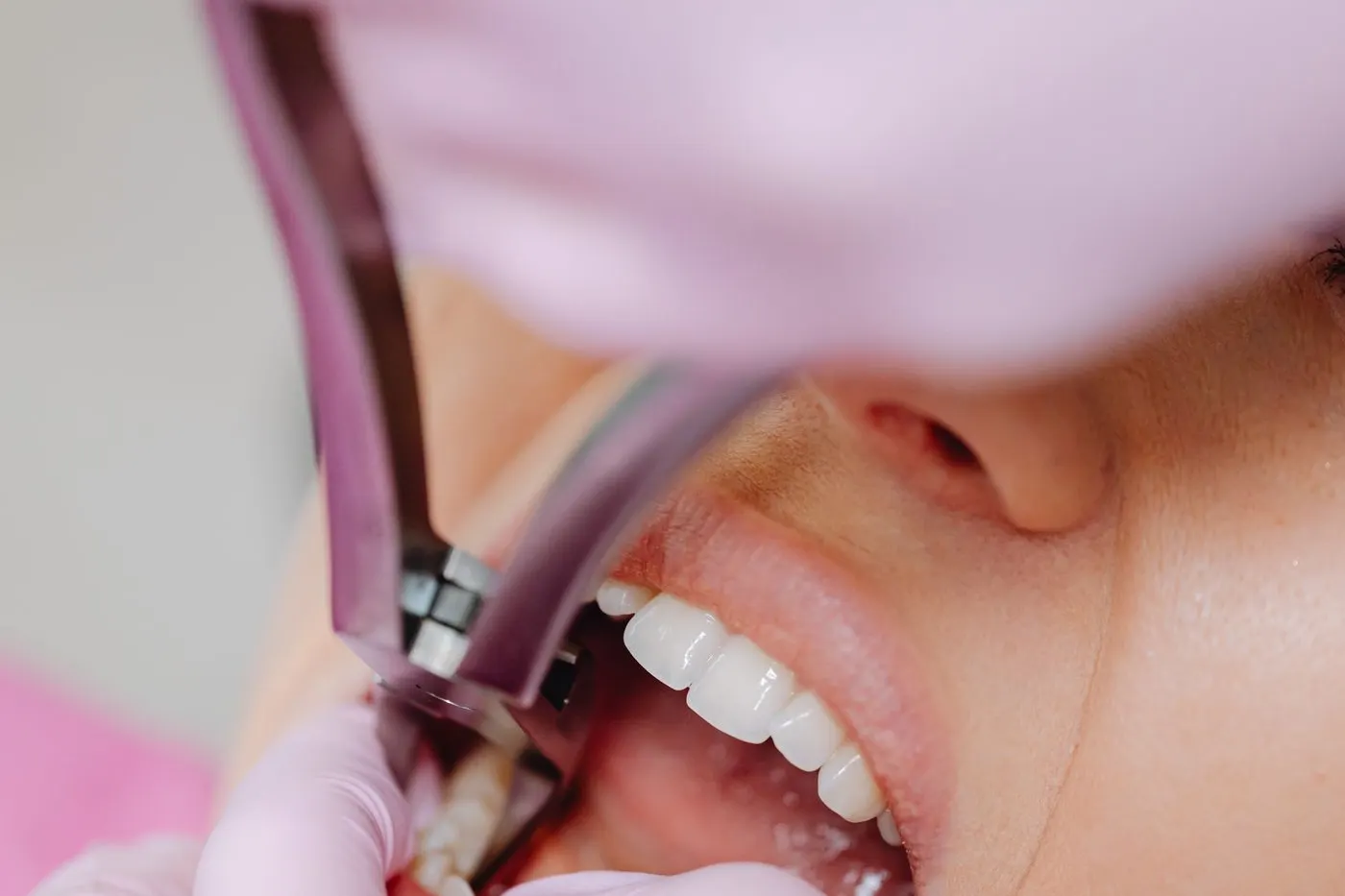
Impacted canine exposure is a minor surgical procedure to uncover a canine tooth that has not come through, so it can be guided into place with braces.
The upper canines, or eye teeth, are among the last front teeth to come through. Sometimes they stay trapped in the bone or under the gum.
An impacted canine can affect the bite and the look of the smile, and in some cases it can damage the roots of nearby teeth. The canines also play an important role in guiding the bite, so keeping them is often worthwhile when it can be done safely.
Treatment combines a minor surgical step with orthodontic treatment over time.
What is an impacted canine?
An impacted canine is a canine tooth that is blocked from coming through the gum in the normal way.
Signs may include:
- An adult canine that has not appeared when expected
- A baby canine that stays in place long after it should have fallen out
- An X-ray showing the canine developing in the wrong position
How does impacted canine exposure work?
The surgeon opens the gum over the tooth and, in many cases, bonds a small bracket with a fine chain to it.
Then:
- The chain is linked to the braces
- The orthodontist applies light, steady pulling (traction)
- The tooth is guided gradually into position over several months
Sometimes the gum is simply reshaped so the tooth can come through on its own. The approach depends on how deep the tooth is and where it lies.
Who is a good candidate for impacted canine exposure?
This treatment may be recommended for:
- Teenagers and adults whose canine has not come through when expected
- Children whose X-rays show a canine developing in the wrong position
- People whose baby canine is still in place long after it should have fallen out
- Patients who already have, or are planning, braces to correct their bite
Suitability is determined after assessment.
How is the treatment planned?
- The orthodontist and surgeon review X-rays to find the exact position of the tooth
- A 3D scan may sometimes be requested
- Braces are often fitted first to make space
- The exposure is carried out
- Traction begins and progress is reviewed at each orthodontic visit
Most patients start with an Orthodontic Consultation and continue with Dental Braces.
Is impacted canine exposure painful?
The exposure is usually done under local anesthesia in one visit, and it is usually well tolerated. For some patients, treatment under general anesthesia may be discussed.
Some soreness and swelling for a few days afterwards is common and usually settles with simple pain relief.
How long does it take for the canine to move into place?
It varies.
Guiding an impacted canine into position often takes many months as part of the overall braces treatment. Your orthodontist will review progress at each visit.
The time needed depends on how deep the tooth is, the direction it is facing and how it responds to traction.
What should I do after the procedure?
Dentists commonly advise:
- Eating soft food for the first few days
- Keeping the area clean as instructed
- Taking simple pain relief if needed
Contact us urgently if swelling spreads, or if you develop a fever or difficulty swallowing.
What are the risks of impacted canine exposure?
The traction stage takes time, and results vary. Possible problems include:
- The canine moving slowly
- The canine not responding to traction
- The canine being fused to the bone
- Rarely, effects on the gum or neighboring teeth
If this happens, a different plan may be needed. Your orthodontist and surgeon will explain the options at each stage.
What if the canine cannot be moved?
If a canine is in a position where it cannot be moved safely, removing it and planning another way to fill the space may be discussed instead.
In this case, a Surgical Extraction may be recommended.
What happens if an impacted canine is left untreated?
Some impacted canines cause no problems. Others can damage the roots of neighboring teeth or develop a cyst.
If treatment is not chosen, regular X-ray checks are important.
How much does Impacted Canine Exposure cost in Qatar?
The cost depends on:
- Whether the tooth needs surgical exposure with traction or a more involved impacted canine procedure
- The type of anesthesia used
- Your overall orthodontic plan
Detailed information is provided after your assessment, so you know what is included before you decide.
Impacted Canine Exposure at Tadawi Medical Center starts from 2,500 QAR, and the final cost is confirmed before treatment.
Orthodontic treatment with braces is priced separately.
Impacted Canine Exposure at Tadawi Medical Center
Impacted canines are managed as a team by our oral and maxillofacial surgeon, Dr. Natashekara Mallesh, and our orthodontist, Dr. Peeyush Jain.
Our service includes:
- X-ray review and joint treatment planning
- Surgical exposure of the canine
- Orthodontic traction with braces
- Aftercare advice and follow-up visits
All care follows established clinical guidelines and patient safety standards.
Book a consultation at Tadawi Medical Center
If you or your child has a canine that has not come through, our surgeon and orthodontist can review the X-rays, explain the options and plan treatment based on your assessment.