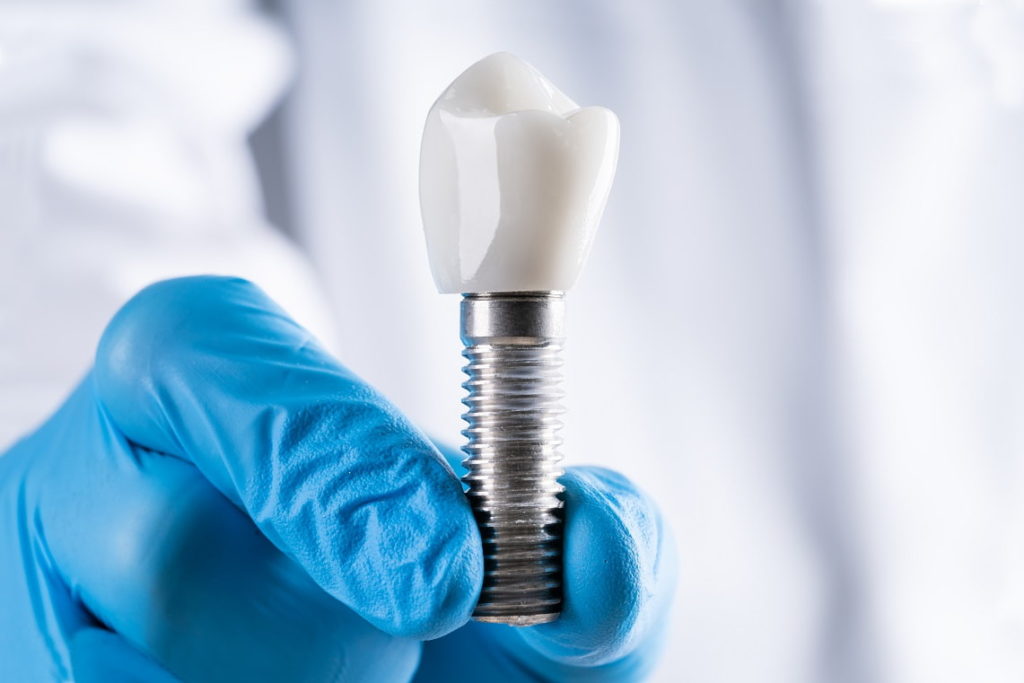
Restorations over implants are the visible teeth fixed on top of dental implants: a single crown, an implant bridge or a denture held by implants. The implant is a small titanium post that acts as an artificial root in the jawbone; once it has bonded with the bone, the dentist attaches the restoration so you can bite, chew and smile with a fixed replacement.
When the jawbone has thinned after tooth loss, a dental bone graft may be needed first to give the implant enough support. Your dentist checks this with X-rays or 3D imaging during the consultation.
How dental implants with restorations work
A dental implant is a small titanium post placed in the jawbone to act as an artificial root. Once it has bonded with the bone, a restoration is attached on top: a single crown, a bridge or a denture fixed to several implants. When the jawbone has thinned after tooth loss, a bone graft may be done first or at the same time to give the implant enough support.
Replacing missing teeth helps you keep chewing well and eating a varied diet, which supports healthy ageing, and implants are followed up as part of a long-term plan with our dental team.
Types of restorations over implants
- Single implant crown: replaces one missing tooth without touching the teeth next to it.
- Implant bridge: replaces several missing teeth in a row using two or more implants as supports.
- Implant-supported denture: a full arch of teeth fixed to, or clipped onto, several implants, so it stays stable when you eat and speak.
The material and shade are chosen to match your natural teeth, and the dentist explains which option suits your bone, bite and budget.
Who are dental implants with restorations for?
- adults missing one tooth, several teeth or all teeth in a jaw
- people who want a fixed alternative to a removable denture
- patients with enough bone, or who can have bone grafting
- people in good general health with healthy gums
Heavy smoking, uncontrolled diabetes, some medicines that affect bone, and pregnancy can affect whether and when implants are suitable. The dentist reviews your medical history first.
What to expect at Tadawi Medical Center
Planning starts with a consultation, examination and X-rays or 3D imaging to measure the bone. If grafting is needed, the dentist explains how it fits into the timeline. The implant is placed under local anaesthetic, then given time to heal and bond with the bone. Afterwards, impressions are taken and the crown, bridge or denture is made and fitted. You will receive aftercare advice on swelling, diet and cleaning, and regular check-ups help protect the implant.
Related treatments at Tadawi
Read more about Dental Implants in general. Healthy gums are important for implants, so Teeth Scaling and Root Planing may be recommended first. Start with a Dental Consultation to find out whether implants suit you.
Frequently asked questions
Is implant surgery painful?
The area is numbed during the procedure. Some swelling and discomfort afterwards is common and usually managed with simple pain relief as advised by the dentist.
How long does the whole treatment take?
It depends on whether bone grafting is needed and how the bone heals. Treatment usually takes a few months from implant to final restoration.
How much do dental implants with restorations cost in Doha?
The cost of dental implants with restorations depends on your assessment and the treatment plan the doctor recommends, and it is confirmed with you before any treatment starts. You can see current prices on this page or ask our team on WhatsApp.
Book Dental Implant with Restorations over Implants at Tadawi Medical Center