
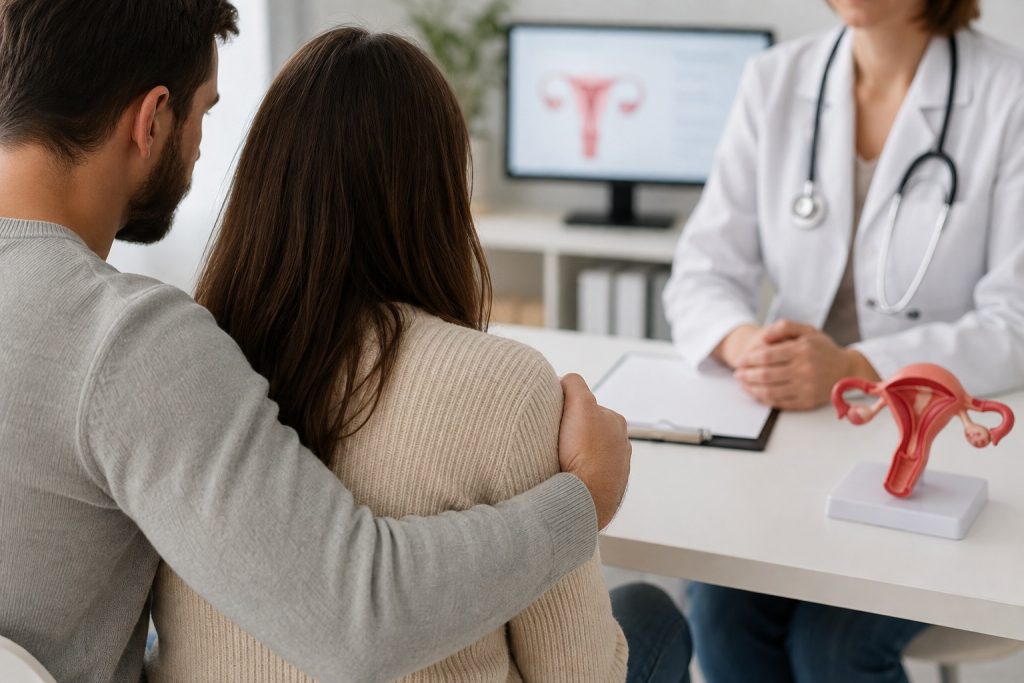
Injection of semen after centrefugation and preparation into the uterus at the time of evulation.
How intrauterine insemination (IUI) works
Intrauterine insemination places a prepared sample of the husband’s sperm directly inside the uterus around the time of ovulation. The sample is washed and concentrated in the laboratory so that the most active sperm are selected. Placing them higher in the reproductive tract shortens the distance they need to travel to reach the egg. IUI is often combined with medicines that support ovulation, and the timing is guided by ultrasound monitoring or hormone tests. It is usually one step within a longer fertility plan followed with Tadawi’s doctors, which also looks at the couple’s general health over time.
Who is IUI for?
- Couples with mild male factor problems, such as slightly low sperm count or movement
- Women with ovulation problems, including PCOS, who are also taking ovulation medicines
- Couples with unexplained infertility
- Couples who have difficulty with intercourse
IUI generally needs at least one open fallopian tube, so the doctor may check the tubes before recommending it.
What to expect at Tadawi Medical Center
Treatment begins with a fertility consultation and the necessary tests for both partners. During the treatment cycle, you will usually have one or more ultrasound scans to follow the growth of the eggs. When ovulation is expected, the husband provides a semen sample, which is prepared in the laboratory. The insemination itself is a short procedure: a speculum is placed, as in a Pap smear, and a thin soft catheter is passed through the cervix to release the sperm into the uterus. You may rest briefly afterwards and can then return to normal activities. Some women notice mild cramping or light spotting. A pregnancy test is usually done about two weeks later, and the team will tell you the right day.
Related treatments at Tadawi
IUI is often part of a wider plan that includes Infertility Follow-up and Treatment, Ultrasound Imaging (Pelvic Ultrasound) for follicle monitoring and Non-Surgical Polycystic Ovary Treatment for women with PCOS.
Frequently asked questions
Is IUI painful?
Most women describe it as similar to a Pap smear, with mild, short-lived cramping. It does not usually require anaesthesia.
How many IUI cycles might I need?
It varies from couple to couple. The doctor will review the results after each cycle and discuss whether to continue or consider another option.
Is IUI the same as IVF or ICSI?
No. In IUI, fertilisation happens naturally inside the body. In IVF and ICSI, eggs are collected and fertilised in a laboratory.
How much does intrauterine insemination cost in Doha?
The cost depends on your assessment and the treatment plan the doctor recommends, so it is confirmed with you before anything is done. You can see current prices on this page or ask our team on WhatsApp.




