
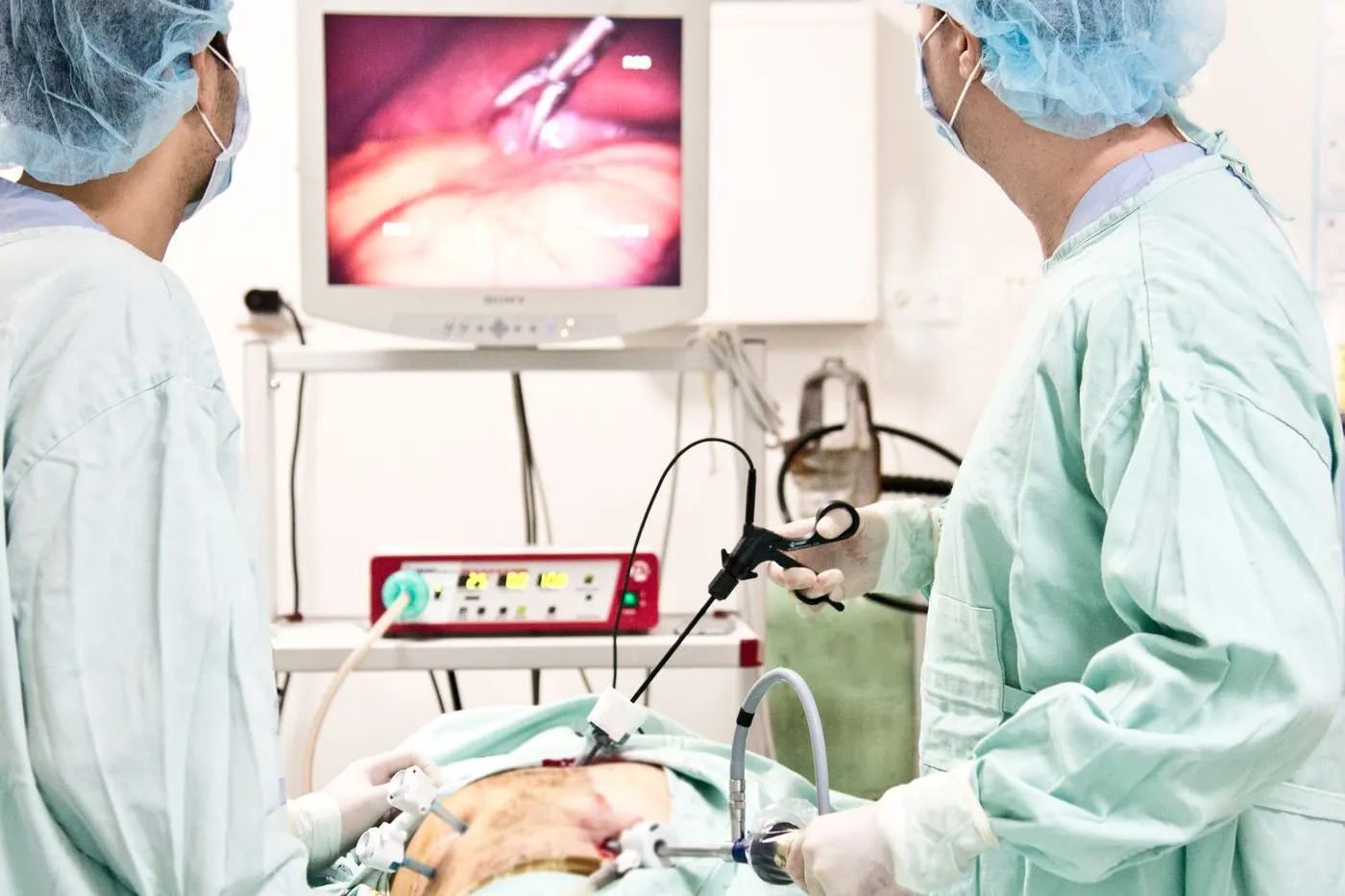
A minimal invasive surgery to remove things likea a cyst or mass or even to take a biopsy.
How laparoscopic surgery works
Laparoscopy, often called keyhole surgery, is done through a few small cuts in the abdomen instead of one large incision. The abdomen is gently filled with carbon dioxide gas to create space, and a laparoscope, a thin tube with a camera, is inserted to show the pelvic organs on a screen. Fine instruments are then passed through the other small openings. In gynecology, laparoscopy can be used both to find the cause of a problem and to treat it in the same operation. A quicker recovery helps women get back to staying active, which matters for long-term health and healthy ageing.
Who is laparoscopic surgery for?
- Women with long-standing pelvic pain where the cause is unclear
- Suspected or known endometriosis
- Ovarian cysts that need removal
- Checking the fallopian tubes as part of a fertility evaluation
- Taking a biopsy of a mass or abnormal tissue
- Selected cases of PCOS needing ovarian drilling, or certain fibroids
What to expect at Tadawi Medical Center
The process starts with a consultation, examination and imaging such as a pelvic ultrasound. If laparoscopy is recommended, the doctor explains what will be done, the expected benefits and the risks, including bleeding, infection, injury to the bowel, bladder or blood vessels, and the possibility of converting to open surgery if needed. The procedure is performed under general anaesthesia, and you will receive instructions on fasting and your regular medicines. Recovery is usually quicker than after open surgery. Many women go home the same day or the next day. Shoulder-tip pain from the gas and soreness around the small cuts are common for a few days. A follow-up visit reviews healing and any biopsy results.
Related treatments at Tadawi
Laparoscopy is often linked with Infertility Follow-up and Treatment and Non-Surgical Polycystic Ovary Treatment when medicines have not worked. Imaging with Ultrasound Imaging (Pelvic Ultrasound) usually comes first.
Frequently asked questions
How long does recovery take?
It depends on what is done. After a diagnostic laparoscopy, many women feel back to normal within about a week; after a longer operation, recovery takes more time.
Will there be scars?
The cuts are small, usually one near the belly button and one or two lower down, and tend to fade over time.
Can I eat before surgery?
No, fasting is required before general anaesthesia. The team will tell you exactly when to stop eating and drinking.
How much does laparoscopic surgery cost in Doha?
The cost depends on your assessment and the treatment plan the doctor recommends, so it is confirmed with you before anything is done. You can see current prices on this page or ask our team on WhatsApp.




