
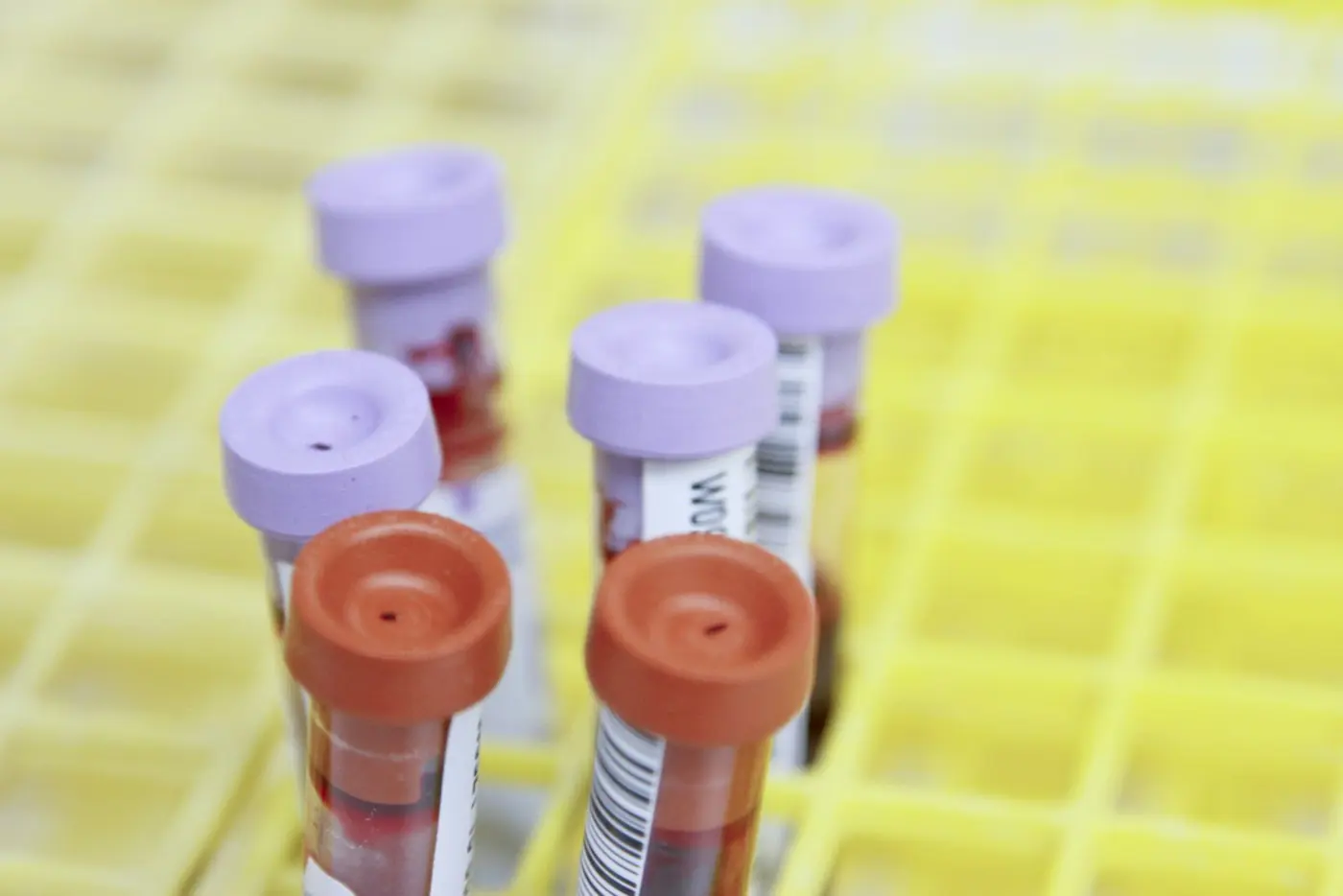
Cancer marker tests are blood tests that measure substances, called tumor markers, which can be higher in some cancers and also in many conditions that are not cancer.
These tests are mainly used by doctors to monitor people who already have a known diagnosis, for example to check how a condition is responding to treatment or to watch for changes over time. In some situations, a doctor may also use them alongside scans and other tests when investigating specific symptoms.
Important: cancer marker tests are not screening tests for healthy people. A normal result does not rule out cancer, and a raised result does not mean you have cancer.
What are cancer marker (tumor marker) tests?
Tumor markers are proteins or other substances made by some tumors, and also by normal tissues. Their levels can rise for many reasons.
Because of this, a single result means little on its own. Doctors look at the trend of results over time, together with your history, examination and imaging.
Which cancer markers can I test?
- CA-125: mainly used in monitoring some ovarian conditions. It can also rise with periods, pregnancy, endometriosis, fibroids, pelvic infection and liver disease.
- CEA (carcinoembryonic antigen): mainly used in monitoring bowel cancer. It can be higher in smokers and in people with inflammatory bowel or liver disease.
- AFP (alpha-fetoprotein): used in monitoring some liver and testicular conditions. It rises normally in pregnancy and can rise with hepatitis or cirrhosis.
- CA 15-3: mainly used in monitoring breast cancer that has already been diagnosed. It can rise with some liver and benign breast conditions.
- CA 19-9: mainly used in monitoring pancreatic and bile duct conditions. It can rise with pancreatitis, gallstones and bile duct blockage, and some people do not produce it at all.
Who should have cancer marker tests?
These tests are usually requested for people who:
- Have a known diagnosis and need regular monitoring
- Have finished treatment and are being followed up by their specialist
- Are being investigated for specific symptoms, as one part of a wider assessment
If you feel well and have no symptoms, these tests are not recommended as a general check-up.
Who should not have cancer marker tests?
Cancer marker tests are generally not advised:
- As a routine screen in healthy people with no symptoms
- As a way to rule out cancer when you have worrying symptoms; you need a doctor’s assessment instead
- During pregnancy without a doctor’s request, as AFP and CA-125 change normally in pregnancy
If you are worried about cancer risk, a general physician consultation is a better starting point. The doctor can advise on recognized screening tests for your age and risk.
Do I need to see a doctor before booking?
You can book the test directly without seeing a doctor first, for example if your specialist has asked for regular monitoring.
If you are not sure which tests you need, you can see one of our general medicine doctors first. We encourage this for anyone who has not been asked to have these tests by a doctor. Results are explained by a doctor on request.
How do I prepare, and how is the test done?
- No fasting is usually needed
- Bring your previous results, as comparing values over time matters most
- Tell us if you are pregnant, on your period, or have had a recent procedure or infection
- Try to use the same laboratory for follow-up tests, as values can differ between labs
A small blood sample is taken from a vein in your arm. It takes a few minutes and is usually well tolerated.
When are results ready?
Results are usually ready within a few days. Our team will let you know when your report is available.
What do the results mean?
Results must be interpreted by a doctor. In general:
- A result within the reference range does not rule out cancer
- A raised result does not confirm cancer and is often caused by other conditions
- A steady rise over several tests may need further investigation
- A falling level during treatment may suggest a response, as judged by your specialist
Do not change any treatment based on a marker result without speaking to your doctor.
What should I do after the test?
Share your results with the doctor who is following your condition. If you have no doctor following you and a result is raised, book a consultation so the result can be reviewed with your history and any further tests can be planned.
Seek medical care promptly if you notice symptoms such as unexplained weight loss, a new lump, blood in the stool or urine, yellowing of the skin or eyes, or persistent abdominal pain, whatever your marker results show.
Are there any risks?
The blood test itself carries little risk, apart from a small bruise. The main risk is misreading the result, which can cause unnecessary worry or false reassurance. This is why doctor interpretation matters.
How much do cancer marker blood tests cost in Qatar?
The cost depends on:
- Which markers your doctor has requested
- How many markers are tested together
- Whether you choose a doctor consultation to review results
Cancer marker blood tests at Tadawi Medical Center start from 220 QAR, and the final cost is confirmed before the test.
Cancer marker blood tests at Tadawi Medical Center
Our general medicine doctors, Dr. Rabab Adam, Dr. Abdalsalam Thaljeh and Dr. Aalia Al-Barwani, can review your history, advise whether these tests are appropriate and explain your results. We provide:
- Direct booking for monitoring tests requested by your specialist
- Sample collection in our in-house laboratory
- Doctor review of results on request
- Related tests such as a liver function test when advised
- Referral to our gynecology and obstetrics clinic or an appropriate specialist when needed
Book your test at Tadawi Medical Center
If your doctor has asked you to monitor a cancer marker, you can book the test directly at our laboratory in Doha. If you are unsure whether you need it, book a general medicine consultation first so a doctor can guide you.