
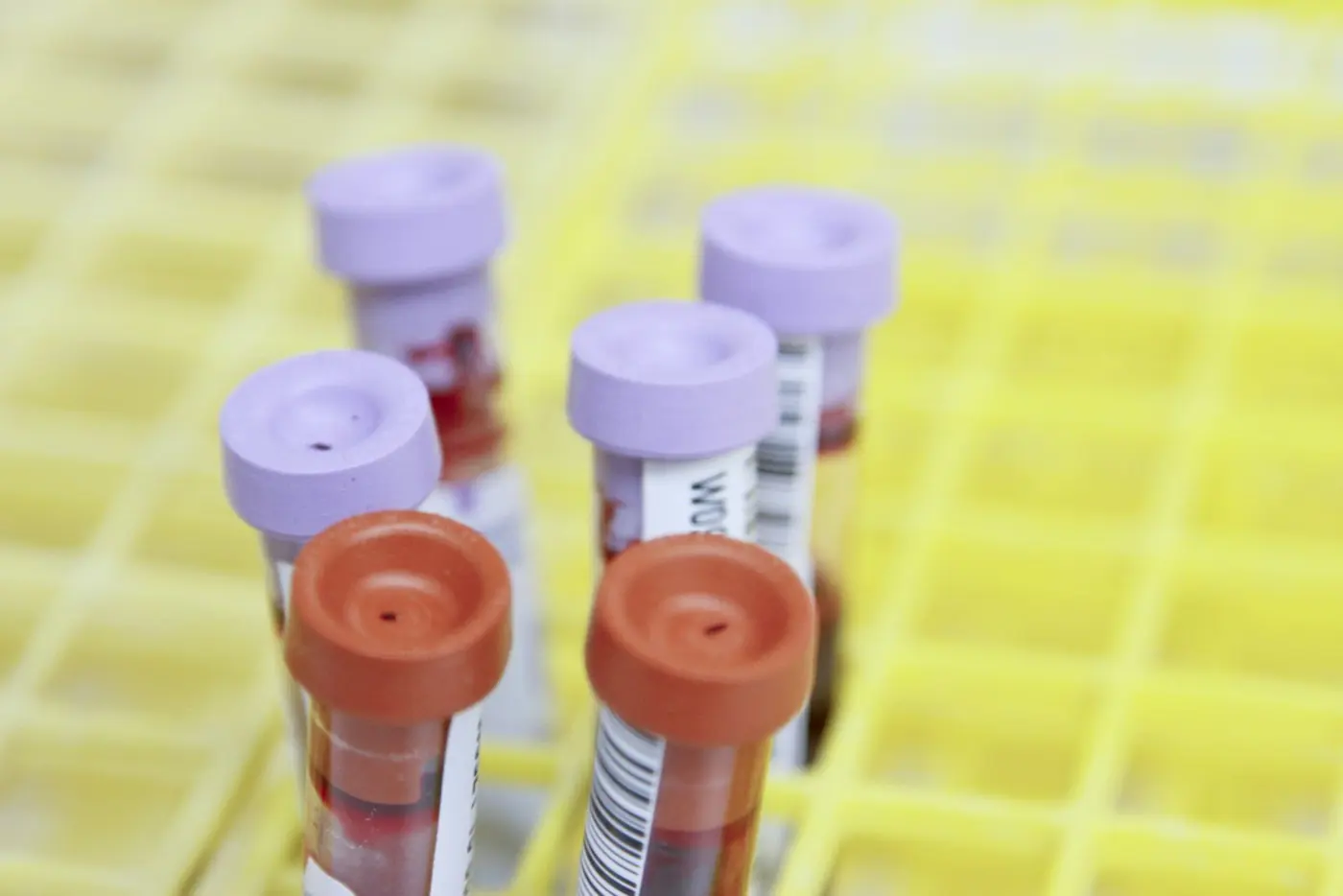
A dust and pollen allergy blood test measures IgE antibodies, the antibodies linked to allergic reactions, against common airborne allergens such as house dust mites, pollen, mold and pet dander.
Dust storms, indoor air conditioning and seasonal pollen mean many people in Qatar live with sneezing, a blocked nose, itchy eyes or wheezing. Knowing what you react to helps you and your doctor plan avoidance and treatment. At Tadawi Medical Center in Doha, you can book the test directly without seeing a doctor first, or see one of our general medicine doctors first if you are not sure which tests you need.
What is an inhalant allergy blood test?
It is a blood test that looks for allergic sensitization to things you breathe in. We offer:
- Total IgE: the overall level of IgE antibodies in your blood
- Specific IgE inhalant panel: IgE antibodies to a group of common airborne allergens
- Mixed allergen RAST: a screening test for IgE to a mix of common allergens
The exact allergens in each panel are confirmed when you book. Inhalant panels commonly include house dust mites, grass and tree pollens, molds, cat and dog dander and cockroach.
Who should have this allergy test?
The test may be helpful if you have:
- Sneezing, a runny or blocked nose, or itchy, watery eyes that keep coming back
- Symptoms that get worse with dust, cleaning, certain seasons or pets
- Asthma or wheezing that may have an allergic trigger
- Eczema with suspected airborne triggers
- Skin conditions or medicines that make skin prick testing difficult
Allergy tests are most useful when chosen based on your symptoms. Suitability is determined after assessment if your symptoms are unclear.
Blood test or skin prick test: what is the difference?
Both tests look for allergic sensitization. Doctors commonly consider:
- A blood test does not require you to stop antihistamines
- A blood test can be done if you have widespread eczema or another skin condition
- A blood test involves one needle and no reaction on the skin
- Skin prick testing gives results within minutes but needs a specialist allergy clinic
Your doctor can advise which test suits you.
How is the test done?
- A nurse takes a small blood sample from a vein in your arm
- The laboratory measures total IgE and/or specific IgE to the allergens requested
- You receive a report listing each result, and a doctor can explain it on request
How do I prepare?
- No fasting is needed
- You can keep taking antihistamines and your usual medicines
- Note down when your symptoms happen and what seems to trigger them, as this helps interpret the results
- Tell us if you have had allergy tests before
Is the test painful?
A blood test is usually well tolerated. You may feel a brief pinch, and some people get a small bruise. There is no risk of an allergic reaction from the test itself, because no allergen is put into your body.
When are results ready?
Results are usually ready within a few days. Our team will tell you the expected time when you book.
What do the results mean?
- Total IgE: a raised level suggests an allergic tendency, but it can also be raised with eczema, asthma, some infections and parasites. A normal level does not rule out allergy
- Specific IgE: results are usually reported as levels or classes. A higher level means you are more likely to be sensitized to that allergen
- Sensitization is not the same as allergy: many people have positive results without symptoms
A result only matters when it matches your symptoms. Results vary between people and must be interpreted by a doctor together with your history.
What happens after the test?
Depending on your results, a doctor may suggest:
- Practical steps to reduce exposure, such as dust-mite covers, regular washing of bedding at high temperature and cleaning air conditioning filters
- Medicines such as antihistamines or nasal sprays
- Treatment of asthma or eczema where relevant
- Referral to an allergy specialist, including discussion of allergen immunotherapy
If food reactions are also a concern, see our Food Allergy Panel.
Are there any risks or reasons not to have the test?
The risks are those of a routine blood test: a small bruise or brief soreness. There is no medical reason not to have the test, and it can be done in pregnancy. A blood test cannot predict how severe a reaction will be.
Call 999 or go to an emergency department if you have swelling of the lips, tongue or throat, difficulty breathing, severe wheezing, or feel faint after exposure to a trigger.
How much does a dust and pollen allergy test cost in Qatar?
The cost depends on:
- Whether you need total IgE only, a specific IgE inhalant panel or a mixed allergen RAST
- Whether other tests are added, such as a Complete Blood Count (CBC)
- Whether you need a doctor’s consultation
The Dust & Pollen Allergy Blood Test at Tadawi Medical Center starts from 200 QAR, and the final cost is confirmed before the test.
Allergy blood testing at Tadawi Medical Center
Our laboratory works with Dr. Rabab Adam, general physician, and our general medicine doctors Dr. Abdalsalam Thaljeh and Dr. Aalia Al-Barwani, who can review your results and help you plan next steps.
We provide:
- Total IgE, specific IgE inhalant panels and mixed allergen RAST tests
- Booking without a referral
- Doctor review of results on request
- Referral to a Dermatology Consultation for skin symptoms, or to an allergy specialist when needed
Book your test at Tadawi Medical Center
If dust, pollen or pets seem to trigger your symptoms, book your allergy blood test online and our team will confirm which panel suits you.
Book Dust & Pollen Allergy Blood Test (Inhalant Panel) at Tadawi Medical Center




