
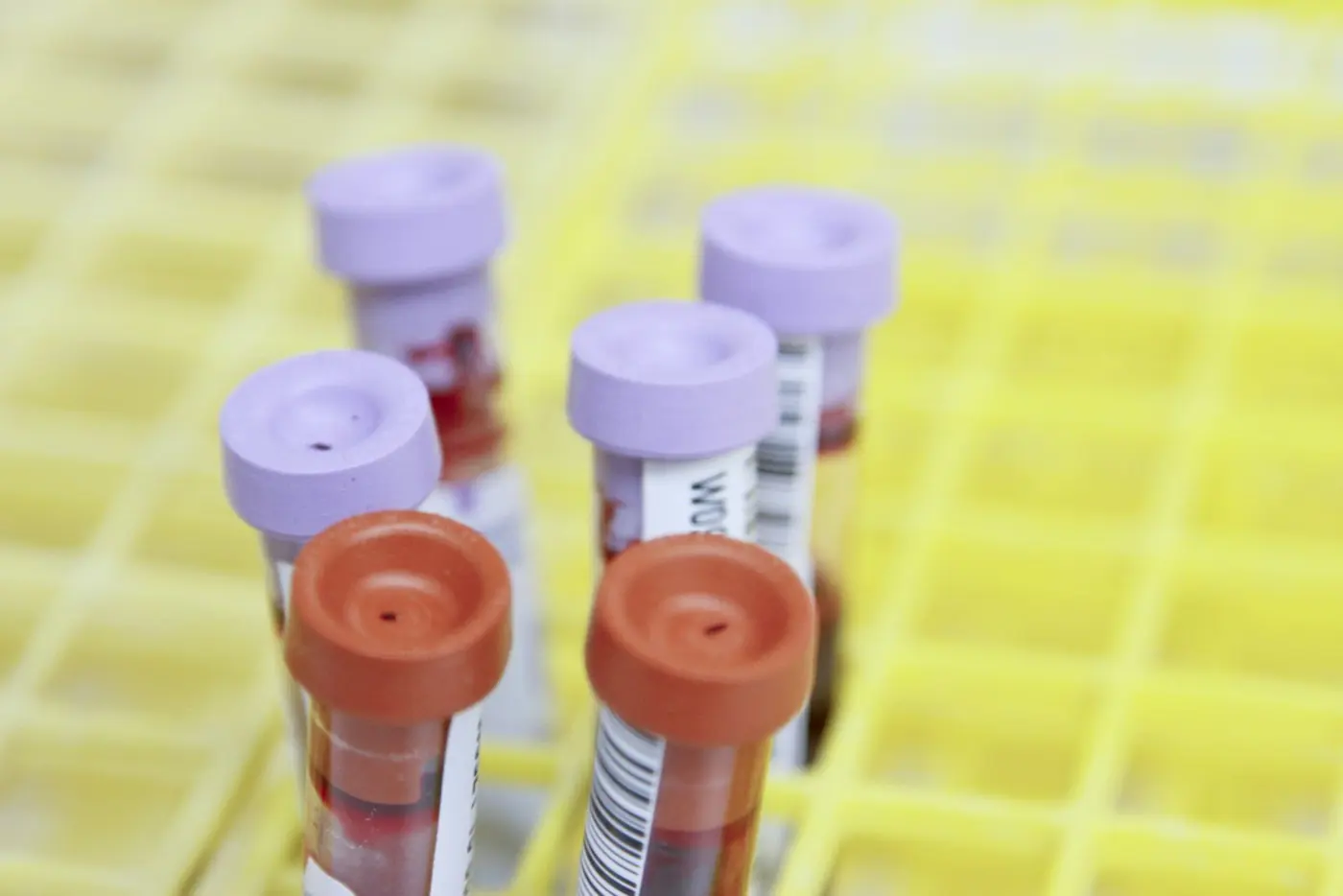
A PCOS hormone panel is a group of blood tests that measures male-type hormones (androgens) and related hormones to help doctors assess polycystic ovary syndrome (PCOS).
PCOS is a common hormonal condition in women of reproductive age. It can cause irregular periods, excess hair growth, acne, weight gain and difficulty getting pregnant. Hormone tests help confirm raised androgens and rule out other conditions that look similar. At Tadawi Medical Center in Doha, you can book the tests directly without seeing a doctor first, or see one of our general medicine doctors first if you are not sure which tests you need.
What is a PCOS hormone panel?
Our panel can include the following tests, alone or together:
- DHEA-S: an androgen made mainly by the adrenal glands
- Sex hormone-binding globulin (SHBG): a protein that carries sex hormones in the blood; it is often low in PCOS
- Free androgen index (FAI): a calculation from total testosterone and SHBG that estimates active testosterone
- 17-hydroxyprogesterone (17-OHP): used to help rule out non-classic congenital adrenal hyperplasia, a condition that can look like PCOS
Your doctor may also suggest Testosterone and Other Androgens tests, LH, FSH, prolactin, thyroid tests or an insulin resistance test such as HOMA IR (Insulin Resistance).
Who should have a PCOS hormone panel?
The tests may be helpful if you have:
- Irregular, infrequent or absent periods
- Excess hair on the face, chest or abdomen
- Persistent acne or thinning scalp hair
- Difficulty getting pregnant
- Weight gain or signs of insulin resistance, such as dark skin patches on the neck
- Polycystic-looking ovaries on an ultrasound
Suitability is determined after assessment, especially if you are taking hormonal medicines.
How is PCOS diagnosed?
There is no single test for PCOS. Doctors commonly use criteria that require at least two of the following:
- Irregular or absent ovulation, shown by irregular periods
- Raised androgens, seen in symptoms or blood tests
- Polycystic ovaries on Ultrasound Imaging (Pelvic Ultrasound)
Other causes, such as thyroid disease, high prolactin and adrenal conditions, must be ruled out first. In adolescents, doctors are more cautious and may wait before diagnosing PCOS.
How are the tests done?
- A nurse takes a blood sample from a vein in your arm
- The laboratory measures the hormones requested
- Your results are shared with you, and a doctor can explain them on request
One blood draw is usually enough for the whole panel.
How do I prepare?
- If you have periods, the tests are often taken in the first days of your cycle (around days 2–5); our team will advise when you book
- A morning sample is usually preferred, especially for 17-OHP
- Fasting is not needed for these hormones, but if glucose or insulin tests are added, you may need to fast for 8–12 hours
- Tell us if you take the contraceptive pill, hormone treatment, steroids or supplements such as DHEA or biotin, as they can affect results
- Do not stop any medicine without speaking to your doctor
Is the test painful?
A blood test is usually well tolerated. You may feel a brief pinch, and some people get a small bruise that fades within a few days.
When are results ready?
Results are usually ready within a few days. Some hormone tests may take longer. Our team will confirm the expected time when you book.
What do the results mean?
Each result is compared with reference ranges for your age and sex:
- Raised FAI or low SHBG: suggests more active androgen, which is common in PCOS and with insulin resistance
- Raised DHEA-S: often mildly raised in PCOS; a markedly high level needs further tests to look at the adrenal glands
- Raised 17-OHP: may suggest non-classic congenital adrenal hyperplasia, and further testing is usually arranged
- Normal results: do not rule out PCOS, as diagnosis also depends on periods and ultrasound findings
Results vary with the cycle day, time of day and medicines. They must be interpreted by a doctor together with your symptoms.
What happens after diagnosis?
PCOS is a long-term condition that can be managed. Depending on your goals, a doctor may suggest:
- Lifestyle changes, including diet, activity and gradual weight loss where needed
- Medicines to regulate periods or reduce excess hair and acne
- Treatment for insulin resistance
- Fertility support if you are trying to conceive
- Regular checks of blood sugar, cholesterol and blood pressure
Learn more about Non-Surgical Polycystic Ovary Treatment with our gynecology team.
Are there any risks, and who should not have the test?
The risks are those of a routine blood test: a small bruise or brief soreness. These tests are not used to diagnose PCOS during pregnancy, as hormone levels change, so please tell us if you are or may be pregnant.
Seek urgent care if you have very heavy bleeding with dizziness, or sudden severe pelvic pain.
How much does a PCOS hormone panel cost in Qatar?
The cost depends on:
- Which tests you choose: DHEA-S, SHBG, free androgen index, 17-OHP or a combination
- Whether you add other hormone, sugar or insulin tests
- Whether you need a doctor’s consultation or an ultrasound
The PCOS Hormone Panel at Tadawi Medical Center starts from 300 QAR, and the final cost is confirmed before the test.
PCOS hormone testing at Tadawi Medical Center
Our laboratory works with Dr. Rabab Adam, general physician, and our general medicine doctors Dr. Abdalsalam Thaljeh and Dr. Aalia Al-Barwani, who can review your results and advise on next steps.
We provide:
- PCOS-related hormone tests from a single blood sample
- Advice on the right day of your cycle for testing
- Booking without a referral
- Doctor review of results on request
- Referral to our gynecology team for ultrasound and treatment
Book your test at Tadawi Medical Center
If you have irregular periods, excess hair growth or other signs of PCOS, book your hormone tests online and our team will advise on timing and preparation.




