
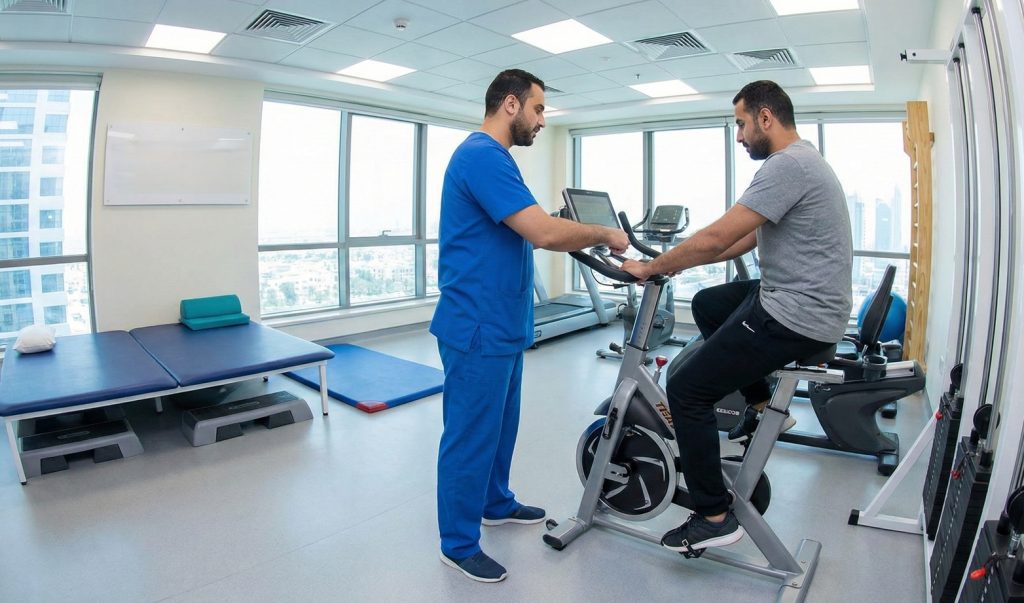
Chest physiotherapy is a group of breathing exercises and hands-on techniques that help loosen and clear mucus from the lungs and make breathing easier.
When mucus builds up in the airways, it can cause coughing, breathlessness, and a higher risk of chest infections. Chest physiotherapy supports people with long-term lung conditions, people recovering from a chest infection, and patients after surgery who find it hard to breathe deeply or cough effectively.
What is chest physiotherapy?
Chest physiotherapy, also called respiratory physiotherapy, focuses on the lungs and breathing.
It aims to:
- Loosen and move mucus out of the airways
- Help you breathe more deeply and efficiently
- Make coughing more effective and less tiring
- Improve exercise tolerance and confidence
It is used alongside, not instead of, the medicines and treatment plan from your doctor.
Who should have chest physiotherapy?
Chest physiotherapy may help people with:
- Bronchiectasis or cystic fibrosis
- Chronic obstructive pulmonary disease (COPD)
- Recovery from pneumonia or another chest infection
- Reduced breathing or weak cough after surgery
- Neuromuscular or neurological conditions that weaken breathing muscles
- Long periods of bed rest or reduced mobility
It is often recommended by a doctor. Suitability is determined after assessment.
What techniques are used?
Your physiotherapist will choose techniques to suit your condition and age. These may include:
- Breathing exercises, such as deep breathing and the active cycle of breathing technique
- Huffing, a controlled way of breathing out to move mucus without tiring coughs
- Positioning, using gravity to help drain mucus from different parts of the lungs
- Percussion and vibration, gentle rhythmic techniques on the chest wall
- Breathing devices, such as handheld devices that help keep airways open
- Assisted coughing for people with weak muscles
- Breathing control and pacing to manage breathlessness during activity
You will also learn techniques you can use at home.
How is a chest physiotherapy session done?
A session usually takes about 30–45 minutes.
- Your physiotherapist reviews your medical history and current symptoms
- Your breathing, chest movement, and cough are assessed
- Oxygen levels may be checked with a finger sensor
- Airway clearance techniques are carried out
- You practice exercises to continue at home
Is chest physiotherapy painful?
Chest physiotherapy is usually well tolerated.
- Some techniques can make you cough, which is expected
- You may feel tired after a session, especially when unwell
- Techniques are adjusted if you have pain, for example after surgery
How many sessions will I need?
This depends on your condition.
- After an infection or surgery, a short course may be enough
- Long-term lung conditions may need regular reviews and a home routine
- Your physiotherapist will review progress and update your plan
Results vary, and doing your home exercises regularly makes a real difference.
How do I prepare for my session?
- Avoid a heavy meal for 1–2 hours before your session
- Take your inhalers or nebulizers as prescribed, unless told otherwise
- Bring your inhalers and a list of your medications
- Bring any recent chest X-ray or doctor’s reports
- Wear comfortable clothing
What are the side effects or risks?
Chest physiotherapy is generally safe when tailored to you. Possible effects include:
- Temporary tiredness or breathlessness
- Coughing spells while mucus is cleared
- Mild chest wall soreness after percussion
- Rarely, a drop in oxygen levels or wheeze, which is monitored during the session
What should I do after a session?
- Rest if you feel tired
- Drink fluids, unless your doctor has limited them
- Continue the exercises taught by your physiotherapist
- Keep walking and moving as advised
- Note any change in the color or amount of mucus and report it
Who should not have some chest physiotherapy techniques?
Some techniques, especially percussion and certain positions, may be avoided or adapted if you have:
- Coughing up blood
- A recent rib fracture, chest injury, or recent chest or spinal surgery
- Severe osteoporosis or a bleeding disorder
- An untreated collapsed lung (pneumothorax)
- Unstable heart problems or very low blood pressure
- Severe acid reflux
During pregnancy, techniques and positions can be adapted, so please let us know.
When should I seek urgent medical care?
Seek urgent care immediately, rather than waiting for physiotherapy, if you have:
- Severe or rapidly worsening shortness of breath
- Chest pain
- Blue or grey lips or fingertips
- Confusion or extreme drowsiness
- Coughing up more than a small amount of blood
- High fever with breathing difficulty
How much does chest physiotherapy cost in Qatar?
The cost depends on:
- The number of sessions you need
- Whether sessions are in the clinic or at home
- The complexity of your condition
Chest Physiotherapy at Tadawi Medical Center starts from 150 QAR, and the final cost is confirmed before the treatment.
Chest Physiotherapy at Tadawi Medical Center
Your sessions are provided by Fatima Zahrae Rhifi (physiotherapist).
We provide:
- An assessment of your breathing and chest
- Airway clearance and breathing exercise sessions
- A home program you can follow between visits
- Coordination with your doctor when needed
Chest physiotherapy can also form part of postoperative rehabilitation or physiotherapy for neurological diseases. If leaving home is difficult, ask about home physiotherapy.
Book a consultation at Tadawi Medical Center
If mucus, a weak cough, or breathlessness is affecting your recovery or daily life, our physiotherapy team can assess your breathing and suggest a plan that suits you.