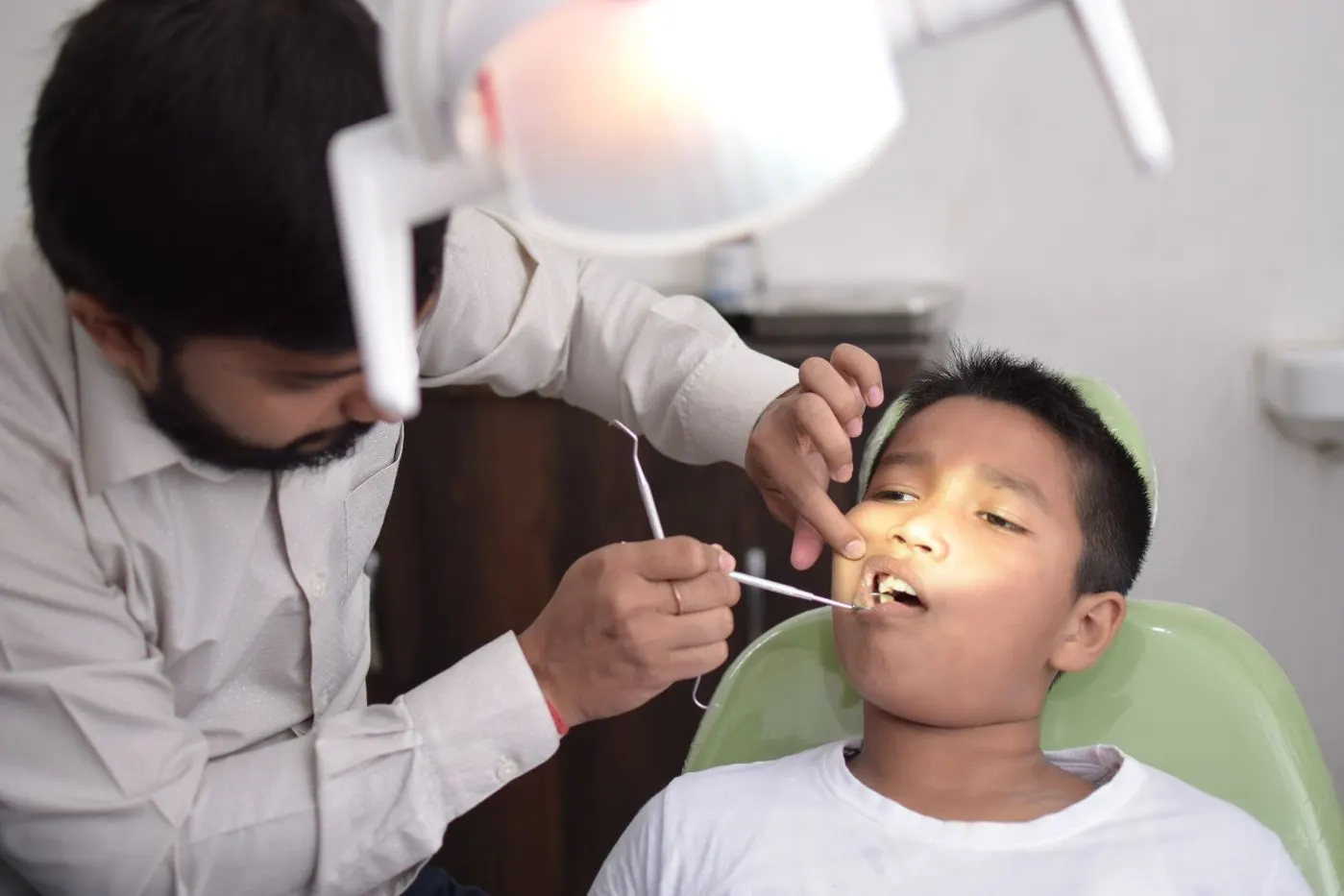
A habit breaking appliance is a small orthodontic device that helps children stop thumb or finger sucking, tongue thrusting and mouth breathing.
These habits are common in young children, and many of them stop on their own. When these habits continue as the adult teeth come in, they can change the alignment of the newly erupted permanent teeth and cause problems with the bite.
These appliances act as a physical barrier or a psychological reminder, helping to reduce the effect of the habit on the teeth, bite and jaw development.
What is a habit breaking appliance?
A habit breaking appliance often has a crib or rake that sits behind the upper front teeth.
Appliances can be:
- Fixed: cemented to the back teeth
- Removable: taken in and out of the mouth
The type is chosen after the orthodontic assessment, based on the habit, the child’s age and how the teeth and bite have been affected.
The appliance is made to fit each child’s mouth, so it sits comfortably behind the teeth.
How does a habit breaking appliance work?
The appliance makes the habit harder or less satisfying. For tongue thrust, it helps guide the tongue away from pushing against the front teeth.
It is most helpful when:
- The child is willing to stop
- Parents give praise and encouragement at home
- The appliance is worn as advised, usually for several months
Some children with tongue thrust may also benefit from exercises with a speech or myofunctional therapist.
At what age should we worry about thumb-sucking?
Many children stop by themselves before age 4 or 5.
If the habit continues as the adult front teeth come in, around ages 6 to 7, it is worth having it checked.
Who is a good candidate for a habit breaking appliance?
A habit breaking appliance may be considered for children who:
- Still suck their thumb or fingers as their adult front teeth are coming in
- Push their tongue against or between the front teeth when swallowing or speaking
- Have developed an open bite or protruding front teeth linked to a habit
- Keep breathing through the mouth after an ENT (ear, nose and throat) assessment
- Have a weak lip seal, or a tongue or lips that do not work as they should
- Have not stopped the habit with encouragement and reminders alone
Suitability is determined after assessment.
Who should not have a habit breaking appliance?
An appliance is not usually used:
- In very young children
- If the child is distressed by it
Positive encouragement is usually tried first. Simple steps such as praise, reminders and reward charts can help some children stop without an appliance.
How is a habit breaking appliance fitted?
- We ask about the habit and examine your child’s teeth, bite and jaws
- Photographs or impressions may be taken
- If an appliance is advised, it is made to fit
- The appliance is fitted at a later visit
- Follow-up visits check progress
A habit breaking appliance is often part of Early Orthodontic Treatment for Children.
Is a habit breaking appliance painful?
A habit breaking appliance is usually well tolerated. In the first days, children often find eating, speaking and sleeping a little different.
Children may have:
- Mild soreness
- Temporary changes to speech
These usually settle within a week or two.
Is a habit breaking appliance a punishment?
No. It is a reminder to help your child stop.
We encourage parents to use praise and support alongside the appliance, as it tends to be more effective this way. Explaining to your child, in simple words, why the appliance is there can also help them accept it.
How should we care for the appliance?
Keeping the appliance and teeth clean is important to avoid decay and gum irritation.
Dentists commonly advise:
- Brushing carefully around the appliance
- Avoiding sticky or hard foods with fixed appliances
- Contacting us if the appliance becomes loose, breaks or causes sores
- Seeking urgent care for facial swelling, fever or trouble swallowing
Will the teeth go back to normal after the habit stops?
Some changes may improve on their own once the habit stops, especially at a young age.
Others may need further orthodontic treatment, such as braces, once more of the adult teeth have come through. Some children also need a Palatal Expander to widen a narrow upper jaw. Results vary.
How much does Habit Breaker Appliance (Thumb-Sucking & Tongue Thrust) cost in Qatar?
The cost depends on:
- The design needed, such as a tongue crib or a fixed or removable habit appliance
- Your child’s individual treatment plan
- Whether further orthodontic treatment is needed
Detailed information is provided after your assessment, so you know what is included before you decide.
Habit Breaker Appliance (Thumb-Sucking & Tongue Thrust) at Tadawi Medical Center starts from 2,275 QAR, and the final cost is confirmed before treatment.
Habit Breaker Appliance (Thumb-Sucking & Tongue Thrust) at Tadawi Medical Center
Children with persistent oral habits are assessed by our orthodontist, Dr. Peeyush Jain, and our pediatric dentist, Prof. Jean Claude Abou Chedid.
Our service includes:
- Assessment of your child’s teeth, bite and jaws
- Advice on habit-stopping support at home
- A custom-made appliance when appropriate
- Fitting and adjustment
- Follow-up visits, working with parents throughout
All care follows established clinical guidelines and patient safety standards.
Book a consultation at Tadawi Medical Center
If your child still sucks a thumb or finger, or pushes the tongue against the front teeth, our team can assess the habit and its effect on the teeth, and explain the options. You can also start with an Orthodontic Consultation.
Book Habit Breaker Appliance (Thumb-Sucking & Tongue Thrust) at Tadawi Medical Center