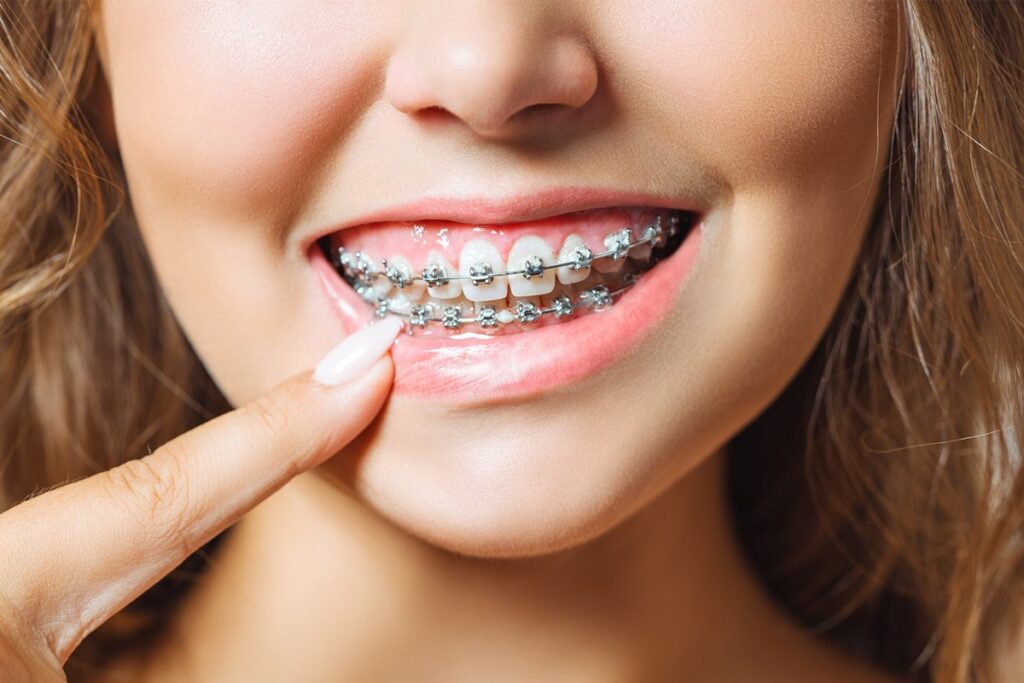
Self-ligating braces, also known as Damon braces, are a type of fixed braces that straighten teeth and correct the bite using brackets with a built-in clip instead of elastic ties.
They are used to treat crowded or gapped teeth and to improve how the upper and lower teeth meet. They work in a similar way to conventional braces.
At Tadawi Medical Center in Doha, self-ligating braces are available in metal or tooth-colored ceramic for teenagers and adults. Treatment is planned according to your teeth, bite and goals.
What are self-ligating braces?
Self-ligating braces are fixed braces made of brackets bonded to the front of the teeth and connected by an archwire.
Each bracket has a small clip or door that holds the wire in place, so no colored or clear elastic ties are needed.
Self-ligating braces are available in:
- Metal brackets
- Ceramic brackets, which are tooth-colored and less noticeable, but can cost more and may be slightly larger
Our orthodontist will advise which suits your teeth and bite.
Self-ligating vs traditional braces — which is better?
Both are effective fixed orthodontic options. The main difference is how the wire is held in the brackets.
Points to consider:
- Self-ligating brackets use a built-in clip instead of elastic ties
- Some people find them easier to keep clean because there are no elastics to trap food
- Research on whether they shorten treatment time or reduce discomfort is mixed.
Results vary from person to person.
Are self-ligating braces faster than regular braces?
Not necessarily. Studies show mixed results.
Treatment time depends mainly on:
- Your bite
- The amount of tooth movement needed
- How well you follow instructions
Who is a good candidate for self-ligating braces?
Self-ligating braces may be considered for people who:
- Have crowded, crooked or spaced teeth
- Have bite problems such as an overbite, underbite or crossbite
- Prefer fixed braces rather than removable aligners
- Have healthy teeth and gums and can keep up good oral hygiene during treatment
Suitability is determined after an orthodontic assessment.
How are self-ligating braces fitted?
Treatment starts with an Orthodontic Consultation and records.
On the fitting day:
- The teeth are cleaned.
- The brackets are bonded to the teeth with a dental adhesive.
- The archwire is placed and held by the clips in each bracket.
- You are shown how to clean around your braces.
Bonding the brackets does not usually need an injection.
Are self-ligating braces painful?
Self-ligating braces are usually well tolerated.
You may notice:
- Soreness or tenderness of the teeth for a few days after fitting and adjustments
- Brackets rubbing on your cheeks at first
Simple pain relief medicines and orthodontic wax usually help. These effects tend to settle on their own, and soft foods can make the first few days more comfortable.
How long does treatment with self-ligating braces take?
Treatment commonly takes around 12 to 24 months, depending on your case.
During this time:
- You will have regular review visits
- Your progress is checked and the wires are adjusted when needed
- The length of treatment depends on your bite and how well you follow instructions
Missed appointments, broken brackets and poor oral hygiene can make treatment take longer. Our orthodontist will give you an estimate after your assessment.
What are the risks of self-ligating braces?
Like all braces, self-ligating braces carry some possible risks:
- White marks on the enamel, decay or gum inflammation if plaque builds up around the brackets
- Minor shortening of the tooth roots, which is usually not significant
- Teeth moving back if retainers are not worn
Good brushing and cleaning between the teeth are essential throughout treatment.
To protect your teeth during treatment, dentists commonly advise:
- Brushing carefully around each bracket and along the gum line
- Cleaning between the teeth every day
- Avoiding hard and sticky foods that can damage brackets or wires
- Keeping up regular dental check-ups alongside your orthodontic visits
Who should not have self-ligating braces yet?
Braces may need to wait if you have:
- Active gum disease
- Untreated tooth decay
These problems are usually treated first, before braces are fitted. A healthy mouth at the start of treatment helps lower the risk of problems while the braces are on.
What should I do if a wire or bracket breaks?
If a wire or appliance breaks, comes loose or digs into your cheek, contact us for a repair appointment.
Seek urgent care if you have facial swelling, a fever or trouble swallowing.
After treatment, you will need Orthodontic Retainers to help keep your teeth in their new position.
How much do Self-Ligating Braces cost in Qatar?
The cost of self-ligating braces depends on:
- Whether one jaw or both jaws are treated
- Whether you choose metal or ceramic brackets
- Your individual treatment plan
Self-Ligating Braces at Tadawi Medical Center start from 12,000 QAR. Current offer until 9 December 2026: metal self-ligating braces 5,000 QAR for 1 jaw (instead of 12,000) or 8,000 QAR for 2 jaws (instead of 21,325); ceramic self-ligating braces 7,000 QAR for 1 jaw (instead of 14,000) or 12,000 QAR for 2 jaws (instead of 24,000). The final cost is confirmed before treatment.
Self-Ligating Braces at Tadawi Medical Center
Self-ligating braces at Tadawi Medical Center are provided by our orthodontist, Dr. Peeyush Jain.
Our self-ligating braces services include:
- Orthodontic assessment and records
- A personalized treatment plan
- Fitting of metal or ceramic self-ligating braces
- Regular review and adjustment visits
- Retainers after treatment
Book a consultation at Tadawi Medical Center
If you are considering braces and would like to know whether self-ligating braces suit your teeth and bite, the dental team at Tadawi Medical Center can provide an orthodontic assessment and explain your treatment options.