Full body mole mapping is a skin check in which a doctor examines your skin from head to toe and photographs your moles, so that any change can be spotted at your next visit. It helps find new or changing moles early, when they are easiest to treat.
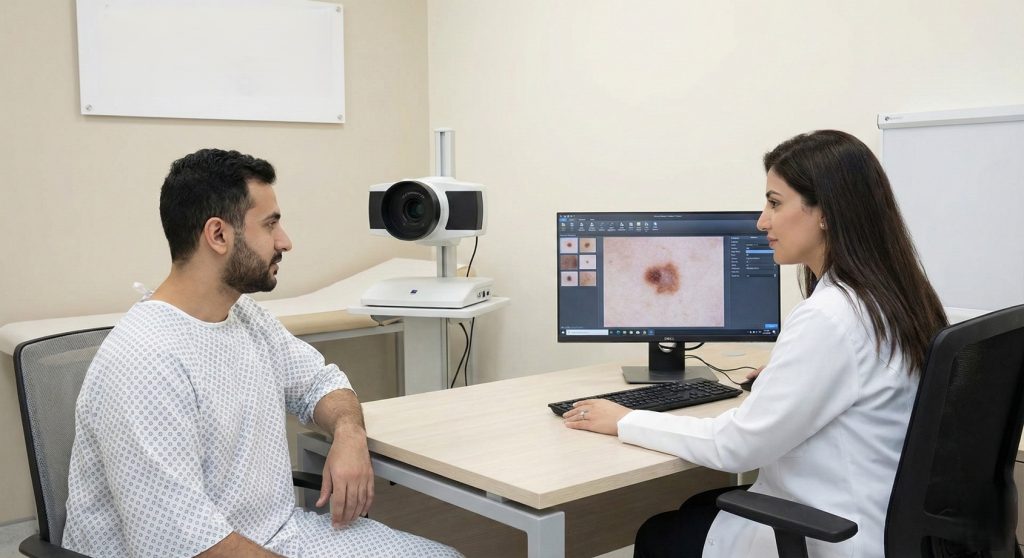
At Tadawi Medical Center in Doha, mole mapping is done in our Dermatology clinic. A doctor examines your skin and takes photographs of your moles with a camera. The photos are kept in your medical record and compared at your follow-up visits.
What is full body mole mapping?
Most moles are harmless. The value of mole mapping is in comparison: a mole that is new, growing or changing is more important than one that has looked the same for years. Photos make that comparison easier and more reliable than memory alone.
A mole mapping visit usually includes:
- Questions about your skin, sun exposure, sunburns and any personal or family history of skin cancer
- A full skin examination by the doctor, including areas you cannot see yourself, such as the back and scalp
- Photographs of your skin and of individual moles that need watching
- Advice on what to look out for at home and when to come back
Mole mapping is a check and a record over time. It does not replace a doctor’s assessment, and it cannot rule out skin cancer on its own. If a mole looks suspicious, the doctor will explain the next step.
Who should consider mole mapping?
Mole mapping can be useful if you:
- Have many moles (for example, more than 50) or large or unusual-looking moles
- Have a personal or family history of melanoma or other skin cancer
- Have fair skin, light eyes or hair, or burn easily
- Have had many sunburns, or spend a lot of time in the sun, which is common in Qatar
- Have noticed a new mole, or a mole that is changing, itching or bleeding
- Want a baseline record of your skin so changes are easier to spot
Warning signs: the ABCDE of moles
Doctors often use the ABCDE guide to describe moles that should be checked:
- A – Asymmetry: one half does not match the other
- B – Border: edges that are irregular, ragged or blurred
- C – Color: several colors or uneven shades of brown, black, red or blue
- D – Diameter: larger than about 6 mm, although melanomas can be smaller
- E – Evolving: any change in size, shape, color or height, or new symptoms such as itching, crusting or bleeding
A mole that looks different from your other moles (sometimes called the “ugly duckling”) is also worth showing to a doctor. If you notice any of these signs, book a skin check rather than waiting for a routine visit.
What happens during a mole mapping visit?
- The doctor asks about your health, your skin history and any moles that worry you.
- You undress to your underwear so the whole skin can be checked, with your privacy respected throughout. You can ask for only certain areas to be checked.
- The doctor examines your skin and photographs your moles with a camera, including close-up photos of moles that need monitoring.
- The doctor explains the findings, and whether any mole needs treatment, removal or simply watching.
- You agree a follow-up plan. At the next visit, your moles are compared with the earlier photos.
Please come without makeup, nail polish or self-tan if possible, and tell the doctor about any mole you are worried about, including on the scalp, between the toes or under the nails.
What happens if a mole looks suspicious?
Depending on what the doctor sees, the next step may be:
- Photographing the mole and checking it again after a short interval to see whether it changes
- Removing the mole and sending it to a laboratory for examination (a biopsy). See Surgical Excision
- Referral to a specialist service if more treatment is needed
Harmless moles, skin tags and warts can also be removed for comfort or appearance. See Mole and Wart Removal.
Checking your own skin at home
Between visits, check your skin about once a month in good light, using a full-length mirror and a hand mirror, or ask someone to help with your back. Look for new moles and for any change in existing ones, and compare with your photos from the clinic if you have them. Protect your skin with shade, clothing and sunscreen, especially in the middle of the day.
Full body mole mapping at Tadawi Medical Center
Our Dermatology clinic offers:
- A full skin examination by a doctor
- Photographs of your moles kept in your medical record for comparison over time
- Clear advice on which moles to watch, and on sun protection
- Mole removal and biopsy when needed
- Follow-up visits at a time that suits your risk
Frequently asked questions
How often should I have mole mapping?
It depends on your risk. Many people with average risk do not need regular mapping. People with many moles, unusual moles or a family history of melanoma are often advised to have a check every 6 to 12 months. The doctor will suggest an interval that suits you.
Does mole mapping hurt or use radiation?
No. It is a skin examination and photographs taken with a camera. There are no needles and no radiation, so it can be repeated safely.
How long does it take?
It depends mainly on how many moles you have. A first visit takes longer than follow-up visits; our team can tell you how long to allow when you book.
Do I need to undress?
To check all of your skin, you will be asked to undress to your underwear, and your privacy is respected throughout. If you prefer, you can ask the doctor to check only certain areas.
When do I get the results?
The doctor explains the findings at the same visit. If a mole is removed and sent to the laboratory, we contact you to discuss the result when it is ready.
Can a mole check rule out skin cancer?
No examination can rule out skin cancer completely. Mole mapping helps by finding changes early. If you notice a new or changing mole between visits, do not wait for your next appointment.
Can children have mole mapping?
Yes, if a child has many moles, a large mole present from birth or a family history of melanoma. A parent stays with the child during the examination.
How much does full body mole mapping cost in Doha?
The price depends on how much of the skin is checked and whether a mole needs to be removed or sent to the laboratory, which are charged separately. Please ask our team on WhatsApp for the current price before your visit.
Book a skin check at Tadawi Medical Center
If you have many moles, a family history of skin cancer, or a mole that is new or changing, book a full body mole mapping visit with our Dermatology clinic in Doha.