About this clinic
Every skin is different, and every acne scar deserves a personal approach. At Tadawi’s Specialist Acne & Acne Scar Clinic we go beyond treating breakouts: your dermatologist looks at what is contributing to your acne, brings active acne under control to reduce the risk of new scars, and then plans treatment for the scars and marks you already have.
Treating scars while new spots keep appearing gives poor results, so the clinic works in four pathways: acne control, acne scar repair, post-acne marks and clear skin maintenance.
Who it is for
- Teenagers and adults with acne that keeps coming back or leaves marks.
- Anyone with acne scars who wants to know which treatment will actually work for their scar type.
- People with brown marks or redness left after acne.
What happens
1. Your assessment
Your dermatologist looks at your skin, asks what you have already tried and checks for hormonal or other contributing factors when needed. Your skin type is assessed too, because it affects which treatments are safest for you. With your consent, photos are taken to compare later. You leave with a written plan.
2. Acne control
A first treatment period of about 12 weeks, then a review to see how well it is working and adjust the plan. This is a starting period, not a promise that the acne will be gone by then. Treatment is usually creams and a skincare routine, sometimes tablets.
For severe acne your dermatologist may suggest isotretinoin. It needs regular blood tests and checks. It can seriously harm an unborn baby, so women who could become pregnant must use reliable contraception and have pregnancy tests during treatment and for a month after it ends.
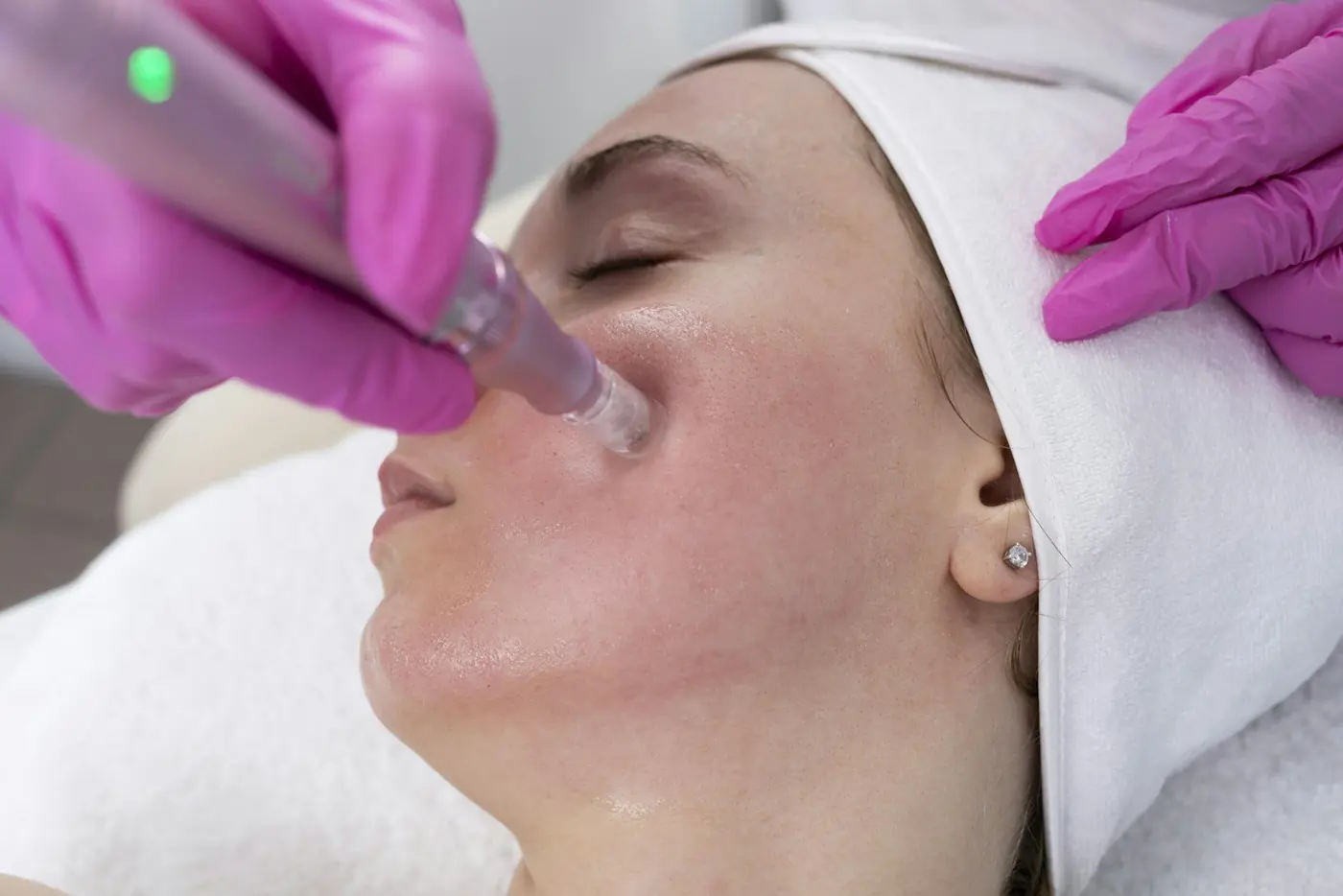
Clinic treatments can help along the way: acne treatment sessions, extraction of blackheads and whiteheads for selected patients, and an intralesional steroid injection for selected large, painful nodules or cysts. Blue light therapy can be added as an optional extra; it is not a main treatment.
3. Acne scar repair
Not all scars are the same. Your dermatologist identifies yours and matches each type to the treatments that suit it:
- Rolling scars (wide, soft dips): subcision, which releases the bands pulling the skin down, sometimes with a dermal filler, and fractional laser.
- Shallow boxcar scars (sharp-edged dips): resurfacing with fractional laser or Morpheus8.
- Deep boxcar and ice-pick scars (narrow and deep): targeted treatment of individual scars, combined with resurfacing.
- Raised (hypertrophic) and keloid scars: steroid injections into the scar, silicone and other selected treatments.
Most people have a mix, so treatments are often combined, which can work better than one treatment alone. PRP can be added to support other treatments. The time between sessions depends on the treatment and on how your skin recovers. See acne scar treatment for the options.
Morpheus8 and other energy-based treatments are done by trained practitioners after careful assessment. Like any such treatment, they can rarely cause burns, scarring or other complications, and your dermatologist explains the risks before you agree.
4. Post-acne marks
Brown marks (post-inflammatory hyperpigmentation) are treated with depigmenting creams, strict sun protection and selected chemical peels; see acne hyperpigmentation treatment. Lasting redness (post-inflammatory erythema) can be treated with a vascular laser.
5. Clear skin maintenance
Acne often comes back when treatment stops. Once your skin is clear, your dermatologist may suggest a maintenance cream, reviews your skincare and sees you for follow-up visits to stop acne returning and protect the results of your scar treatment.
Darker skin types
Qatar’s population includes many skin types. Darker skin is more likely to develop dark marks after acne or after a treatment, and some people form keloid scars. Your dermatologist therefore checks your skin type and any history of keloids, prepares the skin before resurfacing when needed, adjusts laser and energy settings for you, and gives you a strict sun protection and aftercare plan.
How long it takes
The first acne treatment period is about 12 weeks, followed by a review. Scar treatment usually needs several sessions, spaced according to the treatment and how your skin recovers. Scars improve, but usually do not disappear completely.
Cost
The programme starts with a dermatologist consultation. Each treatment is priced on its own page, and scar treatment prices depend on the type of scar and the size of the area, so your dermatologist confirms the price before you start. Medicines are not included.
Good to know
- Sun protection matters throughout treatment: dark marks get darker in the sun.
- Some acne medicines are not safe in pregnancy. Tell your dermatologist if you are pregnant or planning to be.
- Do not squeeze spots: it makes scarring more likely.
Questions before booking? Message us on WhatsApp or see our Dermatology clinic.