
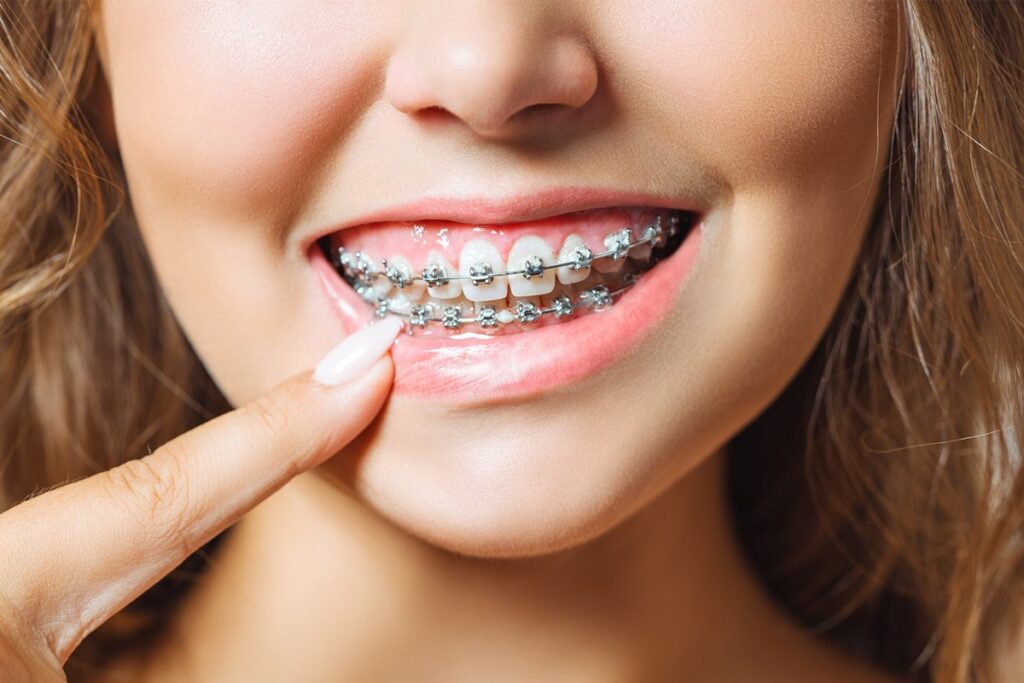
Lingual braces are fixed braces placed on the inner surfaces of the teeth, facing the tongue, rather than on the front.
Because they sit behind the teeth, they are hidden from view in everyday conversation and when you smile.
They are used to straighten teeth and improve the bite in suitable teenagers and adults. They are often chosen by people who want fixed braces but prefer them not to be seen, for example for work or social reasons.
What are lingual braces?
Lingual braces use brackets and wires, like conventional braces, to move teeth gradually into a better position.
Lingual braces are:
- Bonded to the back of the teeth
- Often customized to the shape of each tooth
- Fixed in place for the whole treatment
They are hidden from the front in most situations, but they are not completely invisible. They may be seen if you open your mouth wide or tilt your head back.
How do lingual braces work?
The brackets and wires apply gentle pressure to the teeth.
Over time, this pressure moves the teeth into improved alignment. The orthodontist adjusts the braces at regular visits to guide progress.
Because the braces are fixed, they work throughout the day and night without needing to be taken out.
What problems can lingual braces treat?
Lingual braces can treat many of the same problems as front braces, including:
- Crowding
- Spacing
- Some bite problems
Suitability depends on the orthodontic assessment.
Who is a good candidate for lingual braces?
Lingual braces may suit people who:
- Want fixed braces that are not visible from the front
- Have crowding, spacing or bite problems that need fixed orthodontic treatment
- Have healthy teeth and gums and can keep the area behind the teeth clean
- Are willing to allow time to adapt to changes in speech and tongue comfort
Lingual braces may not be suitable if you have:
- Very short teeth
- A deep bite that would knock the brackets
- Active gum disease
Suitability is determined after orthodontic evaluation. If lingual braces are not suitable, the orthodontist will explain other options.
How are lingual braces fitted?
- Orthodontic assessment and records
- Impressions or scans so the brackets can be prepared
- Bonding of the brackets to the inner surfaces of the teeth
- Regular adjustment visits
- Removal of the braces and fitting of retainers at the end of treatment
Appointments can take longer than with conventional braces.
Are lingual braces painful? Will they affect my speech?
For the first few weeks, it is common to have:
- A sore tongue
- A mild lisp or difficulty with certain sounds
- Some discomfort when eating
These usually improve as you adapt. Soft foods, orthodontic wax and simple pain relief medicines can help.
Many people notice that speech changes improve within a few weeks as the tongue gets used to the braces.
How long does lingual braces treatment take?
Treatment length varies, commonly around 18 to 24 months or more depending on your case.
The length depends on:
- The complexity of the problem
- How the teeth respond to treatment
- Attending regular adjustment visits
What are the risks of lingual braces?
Cleaning behind the teeth takes extra care, and you will be shown how to brush and clean around the brackets. Poor hygiene can lead to:
- Tooth decay
- White marks on the enamel
- Gum inflammation
If a wire or appliance breaks, comes loose or digs into your cheek, contact us for a repair appointment. Seek urgent care if you have facial swelling, fever or trouble swallowing.
Do I need a retainer after lingual braces?
Yes. Retainers are needed after treatment to help keep the teeth in place.
Your orthodontist will advise on Orthodontic Retainers at the end of treatment. Retainers help prevent the teeth from shifting back, and they are usually needed long-term.
Lingual braces vs Invisalign — which is better?
Both are discreet options. Lingual braces are fixed, while clear aligners are removable and must be worn consistently. The choice depends on your bite, the complexity of treatment and your preferences.
You can also compare Invisalign Clear Aligners and Self-Ligating Braces with your orthodontist.
How much does Lingual (Hidden) Braces cost in Qatar?
The cost depends on:
- Whether one jaw or both jaws are treated
- The complexity of your case
- Your individual treatment plan
Detailed information is provided after your assessment.
Lingual (Hidden) Braces at Tadawi Medical Center starts from 18,750 QAR, and the final cost is confirmed before treatment.
Lingual (Hidden) Braces at Tadawi Medical Center
Lingual braces at Tadawi Medical Center are provided by our orthodontist, Dr. Peeyush Jain.
Our service includes:
- Orthodontic assessment and records
- A personalized treatment plan
- Custom lingual braces
- Regular adjustment and monitoring visits
- Retainer planning after treatment
All care follows established clinical guidelines and patient safety standards.
Book a consultation at Tadawi Medical Center
If you are considering braces that are hidden from view, our orthodontist can assess whether lingual braces are suitable for your teeth and bite, and explain all your options.